


Rubber Coated Steel Coil in Automotive Brake System Applications

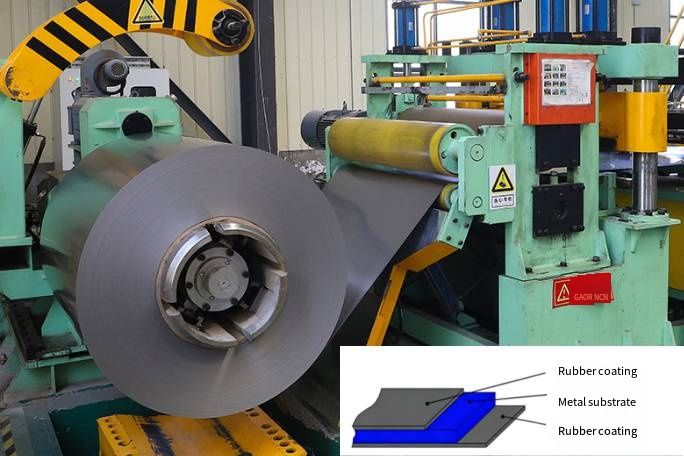
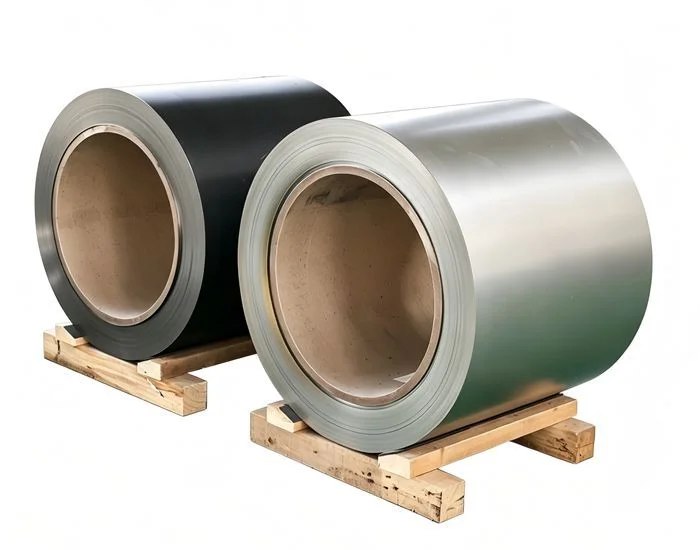
Rubber-coated steel coil, base material for brake anti-noise shims.
In automotive brake systems, continuous vibration during operation frequently leads to brake squeal, judder, and other noise‑related issues. Brake anti‑noise shims and brake hardware kits are critical components for addressing these braking noises—and most of these components are manufactured by stamping rubber‑coated steel coil materials.
Compared to plain steel or pure rubber sheets, rubber‑coated steel coil combines the rigidity of metal with the damping properties of rubber, making it the preferred substrate for brake noise‑reduction components.
This article explains how rubber‑coated steel coil serves brake applications, the operating conditions it must withstand, material‑grade selection logic for brake‑relevant duties, and common failure modes traceable to the coil material itself. For base material property data of NBR‑Coated Steel Coil and FKM‑Coated Steel Coil, please refer to our earlier dedicated articles.
How Rubber‑Coated Steel Coil Performs in Brake Systems
Steel substrate – Provides structural rigidity, maintains dimensional stability after stamping, and withstands continuous impact loads from braking.
Rubber coating – Delivers damping performance, absorbs high‑frequency vibration, and suppresses brake squeal.
Once the coil material is stamped into brake components, the finished parts must endure a range of demanding conditions. These operating conditions directly influence both material selection and the service life of the final components.
- Intermittent high temperatures and repeated thermal cycling
- Continuous vibration and recurring impact loads
- Brake dust, moisture, and salt spray corrosion
Splashes of brake fluid and lubricating oil
Coil Material Selection: NBR‑Coated Steel Coil vs. FKM‑Coated Steel Coil
Based on the operating conditions described above, the choice between NBR and FKM coated steel coil is driven primarily by thermal load and vibration severity. The following table provides a general reference for different brake component types.
Stamped Component | NBR‑Coated Steel Coil | FKM‑Coated Steel Coil |
Brake anti‑noise shims | Standard passenger vehicles in routine urban driving conditions | High‑performance vehicles and high‑load braking applications under sustained high thermal loads |
Brake hardware kits | OE standard fitment and regular aftermarket replacement programs | Commercial vehicles and high‑thermal‑load units |
Brake caliper spring/damping accessories | Medium‑low‑load caliper applications | High‑heat, high‑vibration caliper environments |
Note: Brake disc temperature is a primary reference indicator. Actual material selection should also consider thermal cycling frequency, vibration loads, and salt spray exposure.
Coil‑Related Common Failure Modes
The consequences of material selection decisions become evident once the components enter service.
The following failure modes originate from the coil material itself, not from the stamping or assembly process.
- Insufficient coating adhesion – Under cyclic shock loads from braking, vibration‑driven delamination may occur. The coil then loses its vibration‑damping function, bringing back brake‑squeal issues.
- Incorrect rubber grade selection – Specifying an unsuitable rubber for high‑thermal‑load brake duties leads to premature hardening and aging of the rubber layer, causing brake noise to recur.
- Inadequate substrate corrosion resistance – Insufficient corrosion protection of the steel coil leads to rusting under salt‑spray conditions, compromising component fit precision.
These coil‑level failure risks can be mitigated at the material‑selection stage by matching the coil grade to actual operating conditions, verifying coating‑adhesion quality, and selecting the appropriate substrate material.
End‑Product Reference Display
With the right coil material selected, the finished stamped components perform reliably under brake system conditions. The images below show typical brake components manufactured from rubber‑coated steel coil.

Figure: Typical brake components manufactured from rubber‑coated steel coil.
Summary
Rubber‑coated steel coil combines the rigidity of steel with the damping properties of rubber, making it the ideal substrate for manufacturing brake anti‑noise shims and brake hardware kits. It helps downstream customers reduce brake‑noise‑related failures and serves both OE and aftermarket applications across passenger and commercial vehicles.
If you are sourcing coil material for similar applications, the selection guidance and failure mode analysis above can help you make a more informed decision.
Get Material Selection Support
Need help finding the right coil material for your brake project? Contact our technical team for material‑selection consultation and sample support.
Frequently Asked Questions
Q1: What coil material properties are most critical for brake anti‑noise shim performance?
Coating adhesion, rubber heat‑ageing performance, and substrate corrosion resistance are the three key factors. Poor adhesion leads to delamination; inadequate heat‑ageing resistance causes performance decay under sustained thermal load; insufficient corrosion resistance results in rusting under salt‑spray exposure.
Q2: Is FKM‑Coated Steel Coil mandatory for standard braking applications?
Not necessarily. For standard passenger vehicles running under routine urban‑duty cycles where brake disc operating temperatures remain relatively low, NBR‑Coated Steel Coil fully meets the requirements. FKM‑Coated Steel Coil is mainly intended for frequent high‑load braking and high‑performance‑vehicle scenarios with sustained high thermal loads.
Q3: What demands do frequent high‑load braking conditions place on rubber‑coated steel coil?
High‑load braking generates sustained elevated temperatures and continuous high‑frequency vibration. The rubber layer must maintain its damping properties under these combined thermal and mechanical stresses, while coating adhesion must remain intact throughout the component's service life. For such applications, FKM‑Coated Steel Coil is the preferred option.
Q4: What risks does rubber‑coating delamination pose to brake components?
Delamination directly eliminates noise‑and‑vibration‑damping capability, causing brake squeal to reappear. Detached rubber debris may also affect component fit clearances and trigger recurring brake‑noise problems.
Q5: How can I determine whether a batch of coil material is suitable for my brake project?
Evaluate against three core criteria: whether expected thermal‑load levels match the rubber‑grade service envelope, whether coating adhesion satisfies vibration and forming requirements, and whether substrate corrosion‑resistance matches environmental exposure levels. Material‑test reports and sample validation are recommended for confirmation.
related news
-
How Coating Thickness Affects NBR/FKM Coated Steel Coil Performance
Sep 17,2026
-
PTFE-Coated Brake Pad Abutment: Key Advantages & Industry Trends
May 28,2026
-

FKM Rubber Coated Steel: When NBR Falls Short for Demanding Stamping
Sep 03,2026
KNOW MORE ABOUT US
Please enter your detailed information, and we will contact you later to provide a free quotation.
Want high quality coated steel material?
Tell us about your project so we can help you find the solution that fits your needs!

Fully automatic RCM Production Line in China
Fully automatic stamping factory line in China


quick link
contact
-
+86-531-80993487

-
+86-152-5416-7359

-
ryleezh@chinanewmaterialtech.com

-
High-Tech Zone Qisheng Square 6-708, Jinan, Shandong, China

Copyright©Jinan Sunrise New Material Technology Co. LTD