


Rubber-Coated Steel for Automotive & Industrial Sealing Applications

In modern automotive and industrial equipment, sealing gaskets operate under demanding conditions—exposed to oils, temperature fluctuations, and continuous mechanical stress. When a gasket fails, the consequences go beyond a simple leak: equipment downtime, fluid contamination, and costly maintenance follow. This article explains why rubber-coated steel has become a preferred substrate for sealing applications, how NBR and FKM grades match different operating conditions, and what manufacturers should watch for when selecting and producing coated steel gaskets.
Common Defects of Traditional Sealing Gaskets
Traditional sealing materials each carry inherent structural weaknesses that lead to premature failure in real-world equipment.
Compression set and permanent deformation Pure rubber gaskets, even when formulated with high-quality elastomers, gradually lose their elasticity under sustained clamping force. The material compresses and fails to fully rebound, creating gaps that allow fluid leakage. This phenomenon—known as compression set—is one of the most common causes of gasket failure in long-running equipment.
Thermal cycling fatigue Equipment rarely operates at a constant temperature. Engines start and stop, compressors cycle on and off, and ambient conditions shift between day and night. Each temperature swing causes the gasket material to expand and contract. Over time, ordinary gaskets develop cracks, harden, or delaminate from their backing, compromising the seal.
Limitations of single-material solutions Pure steel provides rigidity and dimensional stability but lacks the elasticity needed to fill microscopic surface irregularities—on its own, it cannot create a reliable seal. Pure rubber delivers conformability and sealing performance but suffers from the deformation and fatigue issues described above. Neither material alone fully addresses the combined demands of modern sealing applications.
Structural Advantages of Rubber-Coated Steel
Rubber-coated steel—also called rubber-metal composite—addresses the shortcomings of single-material gaskets through a layered structure that combines the strengths of both substrates.
Metal core: rigidity and compression resistance The steel substrate serves as a rigid backbone. It resists clamping force, maintains dimensional stability, and prevents the gasket from collapsing under pressure. This directly solves the compression set problem that plagues pure rubber gaskets, ensuring the seal remains intact over extended service life.
Rubber layer: conformability and sealing performance Bonded to the steel surface, the rubber layer provides the elasticity needed to fill microscopic gaps between mating flanges. It conforms to surface irregularities, creates a continuous barrier against fluids, and delivers the chemical and thermal resistance required by the application.
Integrated composite: manufacturing efficiency Because the rubber and steel are bonded into a single continuous coil, rubber-coated steel can be processed on standard high-speed stamping lines. Manufacturers can produce complex gasket geometries in large volumes with consistent quality, without the need for separate assembly steps. This makes the material both technically superior and economically viable for mass production.
NBR vs. FKM: Matching Grades to Sealing Conditions
Selecting the right rubber grade depends on the specific operating environment, not on a generic "higher is better" assumption. For a detailed comparison of material properties, refer to our [NBR vs. FKM comparison guide].
NBR-coated steel: general-purpose oil sealing NBR-coated steel is well suited for sealing applications involving standard mineral oils, hydraulic fluids, and operating temperatures up to approximately 120°C in continuous service. For sealing positions that consistently exceed this range, FKM-coated steel is recommended, with reliable performance up to 200°C under clamped conditions.
FKM-coated steel: high-temperature and harsh-condition sealing FKM (fluororubber) coated steel is specified for sealing positions exposed to elevated temperatures, aggressive fluids, or frequent thermal cycling. It maintains elasticity and sealing integrity under conditions that would cause NBR to harden or degrade, making it essential for high-heat engine compartments, severe-service compressors, and equipment where reliability takes priority over initial material cost.
PTFE-coated steel: extreme chemical corrosion For sealing positions involving highly corrosive chemical media, PTFE-coated steel is also used in the industry as a specialized solution.
Typical Sealing Applications by Equipment Type
A quick reference for sealing applications
| Equipment Type | Use NBR when | Use FKM when |
| Automotive engine | Oil pan, timing cover (≤120°C) | Cylinder head cover, near turbo / exhaust (>120°C) |
| Industrial compressors | Standard cavity & valve seals | High-temp compressor stages, discharge side |
| General industrial equipment | Pumps, gearboxes, hydraulic systems (≤120°C) | High-temp pumps, steam-adjacent valves, hot-oil systems |
Note: Temperature serves as a primary guideline. Fluid media, thermal‑cycle frequency and clamping conditions should also be considered for final material selection.

Various stamped gaskets produced from rubber‑coated steel for automotive and industrial static sealing
Automotive engine system static sealing Engine compartments present one of the most challenging sealing environments: high ambient temperatures, exposure to engine oil and coolant, and frequent thermal cycling from startup and shutdown. FKM-coated steel is typically specified for high-heat sealing positions such as cylinder head covers and exhaust-adjacent gaskets, while NBR-coated steel serves general oil-sealing locations such as oil pan gaskets and timing cover seals. The composite structure prevents both compression set leakage and thermal fatigue cracking.
Industrial compressor cavity sealing Compressors operate continuously for extended periods, with sealing positions exposed to compressed gas, lubricating oil, and steady-state operating temperatures. For standard-temperature compressors, NBR-coated steel provides stable, cost-effective cavity sealing that maintains performance over long service intervals. For high-temperature or heavy-duty compressor models, FKM-coated steel is preferred to resist heat-induced degradation and prevent gas or oil leakage that would reduce compressor efficiency.
General industrial equipment sealing A broad range of industrial machinery—including pumps, gearboxes, valves, and hydraulic systems—requires reliable static sealing at moderate temperatures and with standard fluid exposure. In these applications, NBR-coated steel is the most widely specified substrate, offering a balance of sealing performance, durability, and cost efficiency that suits high-volume production and routine maintenance replacement.
Common Selection and Production Pitfalls for Sealing Gaskets
Overlooking thermal cycling fatigue A frequent selection error is evaluating a gasket material solely on its maximum continuous temperature rating. In practice, most equipment experiences repeated temperature swings from startup and shutdown. A material that performs well at a constant high temperature may still crack or delaminate under thermal cycling. Selection should account for both peak temperature and the frequency and amplitude of temperature variation.
Ignoring rubber-to-metal bond quality Gasket failure is often not caused by the rubber compound itself but by delamination—the rubber layer separating from the steel substrate. The bonding process, surface treatment, and adhesive quality are critical to long-term gasket performance, yet they are frequently overlooked during procurement. A lower-cost coil with inferior bonding can lead to premature field failures and higher total cost of ownership.
Misapplying NBR in high-temperature positions To reduce initial material cost, NBR-coated steel is sometimes specified for sealing positions that regularly exceed its comfortable temperature range. The gasket may perform acceptably for a short period, but the rubber gradually hardens, loses elasticity, and eventually cracks—causing leakage and unplanned equipment downtime. In high-heat positions, the reliability benefit of FKM typically outweighs the material cost difference.
Frequently Asked Questions
Q1: Should I only use maximum temperature ratings to select rubbercoated steel?
No. Peak temperature figures are only one reference point. Thermal cycling frequency, contact fluids, clamping pressure, and flange surface conditions all heavily influence realworld gasket service life. A material that meets your peak temperature may still fail under frequent startstop cycles.
Q2: My gasket failed within months — was it the material or the installation?
Most premature gasket failures in sealing applications are caused by?thermal cycling fatigue, compression set, or delamination. Even the right material grade will fail if the rubber-to-metal bond is poor or if the gasket is exposed to temperature swings beyond its capability. Both material selection and bond quality must be validated.
Q3: Can rubber-coated steel gaskets be reused after disassembly?
Reuse is not recommended. Once a gasket has been clamped and exposed to operating conditions, it has already undergone some degree of compression set. Reinstallation risks inadequate sealing pressure and potential leakage. Always install a new gasket when reassembling equipment.
Q4: Is PTFE-coated steel necessary for chemical sealing applications?
For highly corrosive chemical media, PTFE-coated steel is available as a specialized solution. Selection should be based on the specific chemical composition, concentration, and operating temperature of your application.
Q5: What key quality attributes define reliable rubbercoated steel gaskets?
Pay close attention to rubbertometal bond integrity, coating thickness uniformity, and elastomer compound consistency. Poor bonding or uneven coating will lead to high reject rates during stamping and earlystage gasket failure in service. Request material test reports for batch validation before mass production.
Conclusion
Rubbercoated steel directly addresses the deformation, thermal fatigue, and singlematerial limitations of traditional gaskets. Matching the coating material grade to actual operating conditions and paying close attention to rubbertometal bond quality — rather than defaulting to a single grade — significantly reduces sealing failure rates and extends equipment service life.
Need help selecting the right rubbercoated steel grade for your sealing application? [Contact our technical team] for material consultation and sample support.
related news
-

2024 Automechanika Frankfurt
Feb 27,2025
-
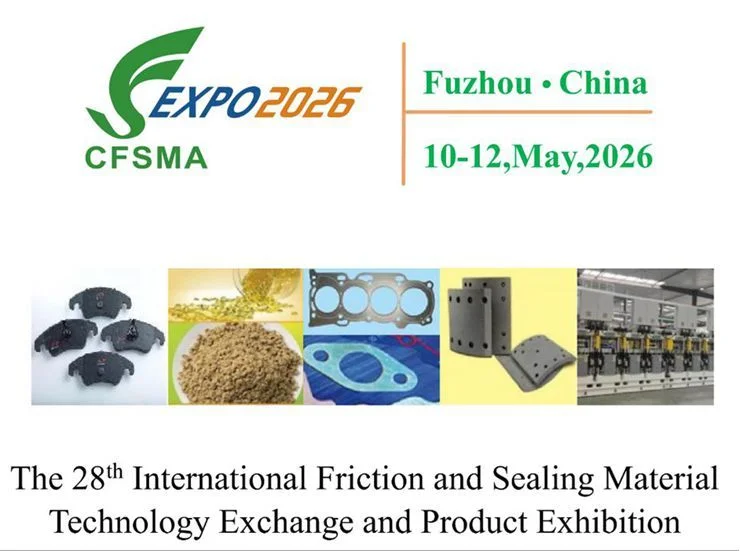
The 28th International Friction & Sealing Material Technology Exchange and Produ
May 28,2026
-
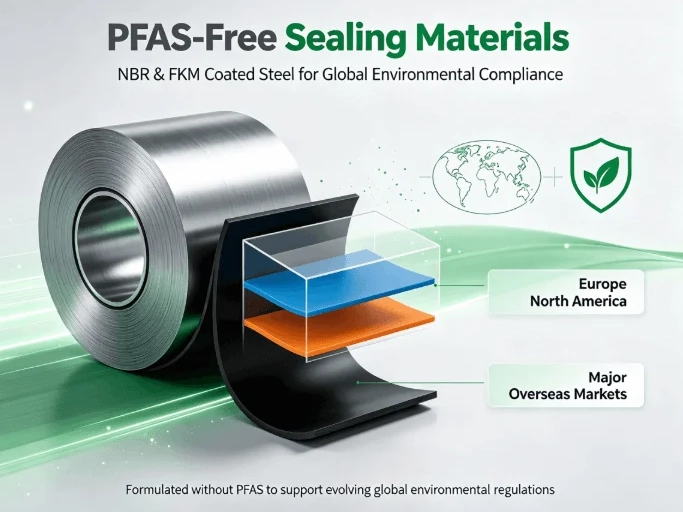
PFAS-Free NBR & FKM Coated Metal Materials for Automotive & Industrial Gaskets
Sep 24,2026
KNOW MORE ABOUT US
Please enter your detailed information, and we will contact you later to provide a free quotation.
Want high quality coated steel material?
Tell us about your project so we can help you find the solution that fits your needs!

Fully automatic RCM Production Line in China
Fully automatic stamping factory line in China


quick link
contact
-
+86-531-80993487

-
+86-152-5416-7359

-
ryleezh@chinanewmaterialtech.com

-
High-Tech Zone Qisheng Square 6-708, Jinan, Shandong, China

Copyright©Jinan Sunrise New Material Technology Co. LTD